All Guides/neighborhoods
neighborhoods · 4 min read
Lavapiés: Multicultural Madrid
Lavapiés is Madrid's most mixed barrio — corralas, La Tabacalera, Calle Argumosa. What to eat, what to see, and an honest note on the atmosphere.
By Get Madrid · Updated September 14, 2026
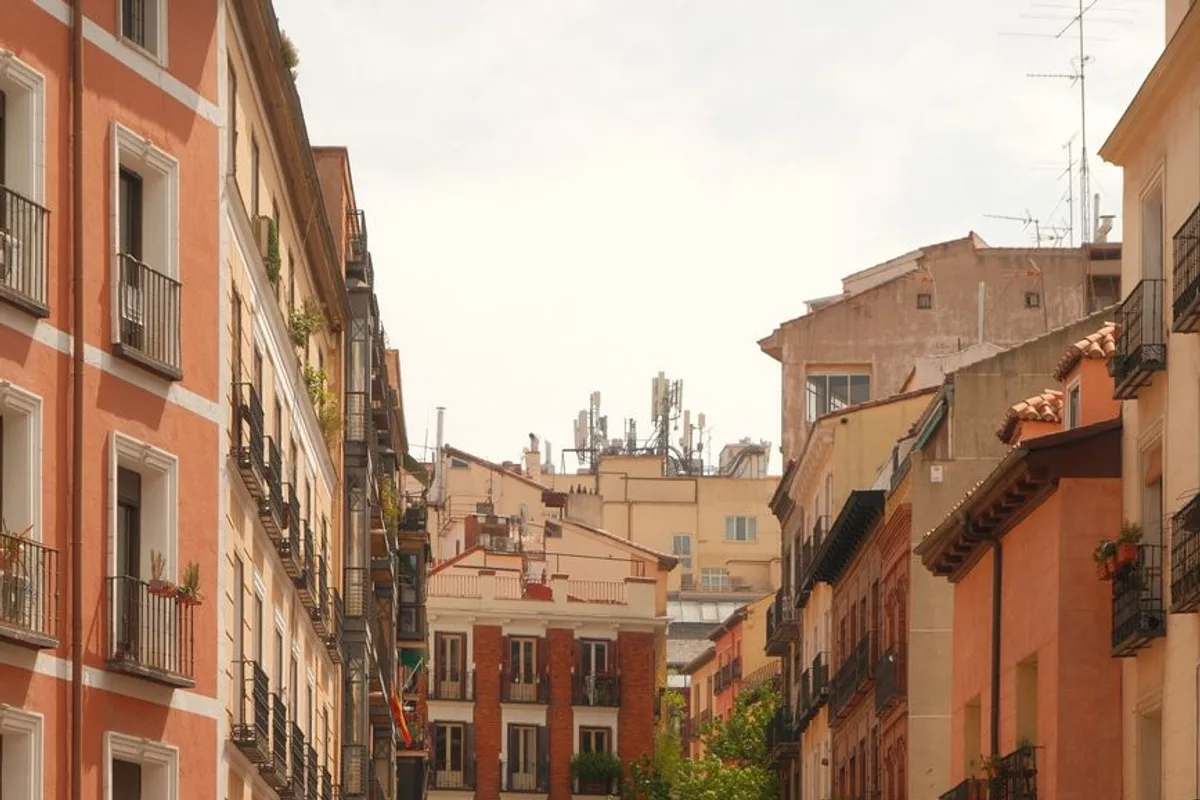
Lavapiés sits on a hill southeast of the centre, and the hill matters — the streets run steeply down toward the old city walls, which is why the barrio kept its shape when the boulevards were cut elsewhere. It is the most ethnically mixed district in Madrid, the most politically noisy, and the one where the gap between what a guidebook describes and what you actually walk through is widest.
The name is traditionally explained by a fountain in the square where Jewish residents washed their feet before entering the synagogue, this having been the city's Jewish quarter before the expulsion. Historians treat the etymology as folklore rather than fact, but the Jewish history of the area is real enough.
The corralas
The architectural signature of Lavapiés is the corrala — a tenement built around an open interior courtyard, with the flats opening onto shared galleries rather than internal corridors. They were working-class housing, and they made the courtyard the social centre of the building, which is more or less the whole point of them.
The famous one stands at the corner of Calle Tribulete 12 and Calle Sombrerete 13, with its facade onto Calle Mesón de Paredes. It was built in 1872 and it inspired the zarzuela La Revoltosa. It is still lived in, so admire it from the street.
La Tabacalera
The enormous building on Calle Embajadores began life as the Royal Spirits and Playing Cards Factory, became the state tobacco and snuff factory, and is now La Tabacalera — a self-managed social and cultural centre. Exhibitions, workshops, concerts, markets, and some of the best large-format street art in Madrid on the interior walls.
It is free, it is volunteer-run, and its opening hours follow the logic of a collective rather than an institution. Check before you cross town. Lavapiés has more neighbourhood associations and self-managed centres than any other district in Madrid, and La Tabacalera is the flagship.
Eating
This is the reason most people come. You can eat Indian, Bangladeshi, Senegalese, Ethiopian, Moroccan, Lebanese, Turkish, Chinese and Vietnamese within a few blocks — a genuinely unusual thing in a city whose food culture is otherwise fiercely Spanish.
Calle Lavapiés itself is the spine of the South Asian restaurants. Quality varies enormously and the touts outside the busier ones are a bad sign rather than a good one; the places locals rate are usually the quieter rooms a little further up.
Calle Argumosa is the other axis, and it is the one to aim for on a sunny afternoon. It is lined with terraces, it catches the light, and it is where the barrio does its tapas crawling — El Económico among the fixtures. It runs along the edge of the Reina Sofía, which makes it the obvious place to end a museum morning.
For traditional Madrid, Taberna de Antonio Sánchez on Mesón de Paredes is one of the oldest tavernas in the city and sits right in the barrio — bullfighting decor, tiled walls, and a menu that has not chased a trend in a hundred years.
What else to see
- Plaza de Lavapiés — the barrio's living room. A theatre on one side, terraces on the others, and a cross-section of everyone who lives here at any hour.
- The Reina Sofía — technically on the northern edge of Lavapiés rather than in Atocha, which is worth knowing when you plan a day. Guernica is a ten-minute walk from Calle Argumosa.
- El Rastro — the Sunday flea market officially belongs to La Latina, but its upper reaches bleed into Lavapiés, and the barrio's bars absorb the crowd afterwards for vermouth.
- Street art — beyond La Tabacalera, the barrio hosts an annual festival of muralism and the walls change year to year.
An honest note
Lavapiés is safe in the ordinary sense and it is not the no-go area that nervous forum posts sometimes suggest. It is also genuinely scruffy in places, busier with street drinking than the centre, and some stretches — particularly around the lower end near Embajadores late at night — feel less comfortable than Malasaña or Chueca at the same hour.
The usual city sense applies and nothing more. Go in daylight for the corralas and Tabacalera, go in the evening for Argumosa, and treat the rest as what it is: a dense, loud, lived-in neighbourhood that has resisted being tidied up for visitors. That resistance is precisely what makes it worth an afternoon.