All Guides/culture
culture · 3 min read
Museo Reina Sofía: The Complete Guide
How to visit Madrid's Reina Sofía — the Guernica room, free-entry hours, the museum's one unusual closing day, and how it fits with the rest of the Golden Triangle.
By Get Madrid · Updated October 10, 2026
One Room Most People Come For
The Reina Sofía is Spain's national museum of 20th-century art, and almost everyone who visits is really there for one room: Guernica, Picasso's 1937 response to the bombing of the Basque town, displayed in a dedicated space exactly as the artist specified. It's a genuinely different experience from seeing it reproduced — the scale alone (roughly 3.5 by 7.8 metres) doesn't come across in photos.
Don't let Guernica be the whole visit. The rooms around it on the same floor cover Dalí and Miró in depth, and the museum's holdings go well beyond the single famous painting — this is the place to see the fuller arc of Spanish modernism that the Prado, by design, stops short of.
The One Closing Day That Catches People Out
Most Madrid museums that close weekly do it on a Monday — the Reina Sofía doesn't. It closes on Tuesday instead, which is the detail that trips up visitors used to the pattern elsewhere in the city (and elsewhere in Europe). If Guernica is the reason you're in Madrid, don't plan it for a Tuesday. See our Madrid on a Monday guide for how this fits with the Prado's and Thyssen's different schedules.
Free Entry Hours
Reported free-entry windows are Monday and Wednesday–Saturday, roughly 19:00–21:00, plus Sunday, roughly 12:30–14:30 — but sources disagree on the exact Sunday window, and some report that a reserved ticket is now required to actually use the free hours, which would mean turning up at the right time isn't enough on its own. [VERIFY: the museum's current free-hours policy and any reservation requirement directly on museoreinasofia.es before planning around it]. The evening free hours are also the museum's busiest — if you have the budget and only one shot at a calm visit, pay for a timed-entry ticket earlier in the day instead.
Getting There
Metro: Atocha (Lines 1 and 3) sits right outside the museum — it's one of the easiest of the Golden Triangle museums to reach, directly across the plaza from Atocha station. Cercanías/intercity rail: if you're arriving by train from elsewhere in Spain, Atocha station puts you at the door.
The Building Itself
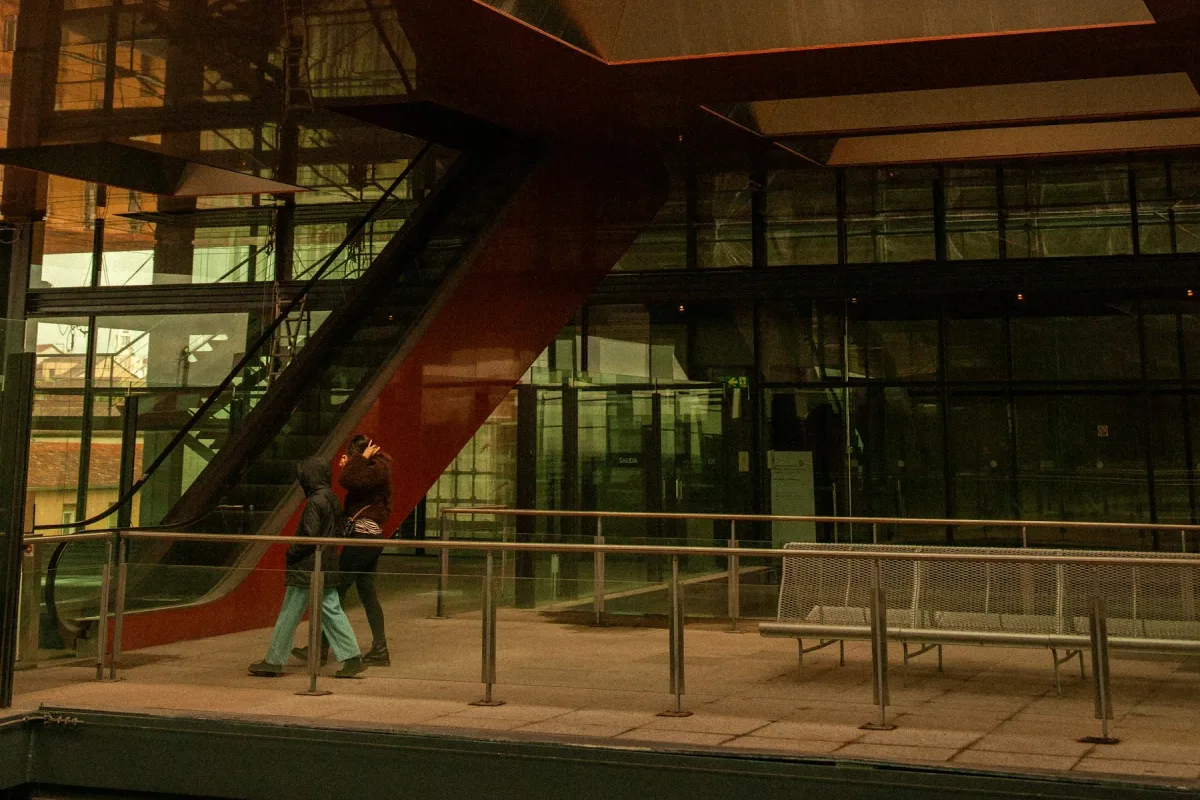
The museum occupies a former 18th-century hospital, extended in 2005 by Jean Nouvel with a glass-roofed wing that houses the bookshop, auditorium, and café. The lift up through that extension frames views back across the Atocha rooftops — worth a look even if you're moving quickly between galleries.
The Golden Triangle of Art
The Reina Sofía, Prado, and Thyssen-Bornemisza sit within about a fifteen-minute walk of each other along Paseo del Prado — together, Madrid's Golden Triangle of Art. A combined ticket covering all three exists and is worth it if you're planning to see more than one. See our Museo del Prado guide for how to sequence a two-museum (or three-museum) day without exhausting yourself.
Practical Notes
Bags: large backpacks go through the cloakroom, as at the other Golden Triangle museums. Photography: policy varies by room and exhibition — check signage rather than assuming it's allowed throughout. Timing: budget at least two hours if Guernica and the Dalí/Miró rooms are the priority; longer if you want the full collection.