All Guides/culture
culture · 4 min read
Football in Madrid: Stadiums & Tickets
Watching football in Madrid — Bernabéu and Metropolitano stadium tours, how to buy match tickets, what they cost, and what to expect on a matchday.
By Get Madrid · Updated September 9, 2026
The Two Clubs
Madrid is a two-club city in a way few capitals are. Real Madrid — record European champions, based at the Santiago Bernabéu in the wealthy north — carries the establishment identity. Atlético de Madrid, from the working-class south and now at the Cívitas Metropolitano out east, carries the counter-identity, and supporters take the distinction seriously. El Derbi Madrileño between them is one of the fiercest fixtures in Spain.
There's a third: Rayo Vallecano, the small, fiercely political club from Puente de Vallecas. Tickets are cheaper, the ground is tiny, and the atmosphere is the most intense per capita in the city.
The Santiago Bernabéu Tour
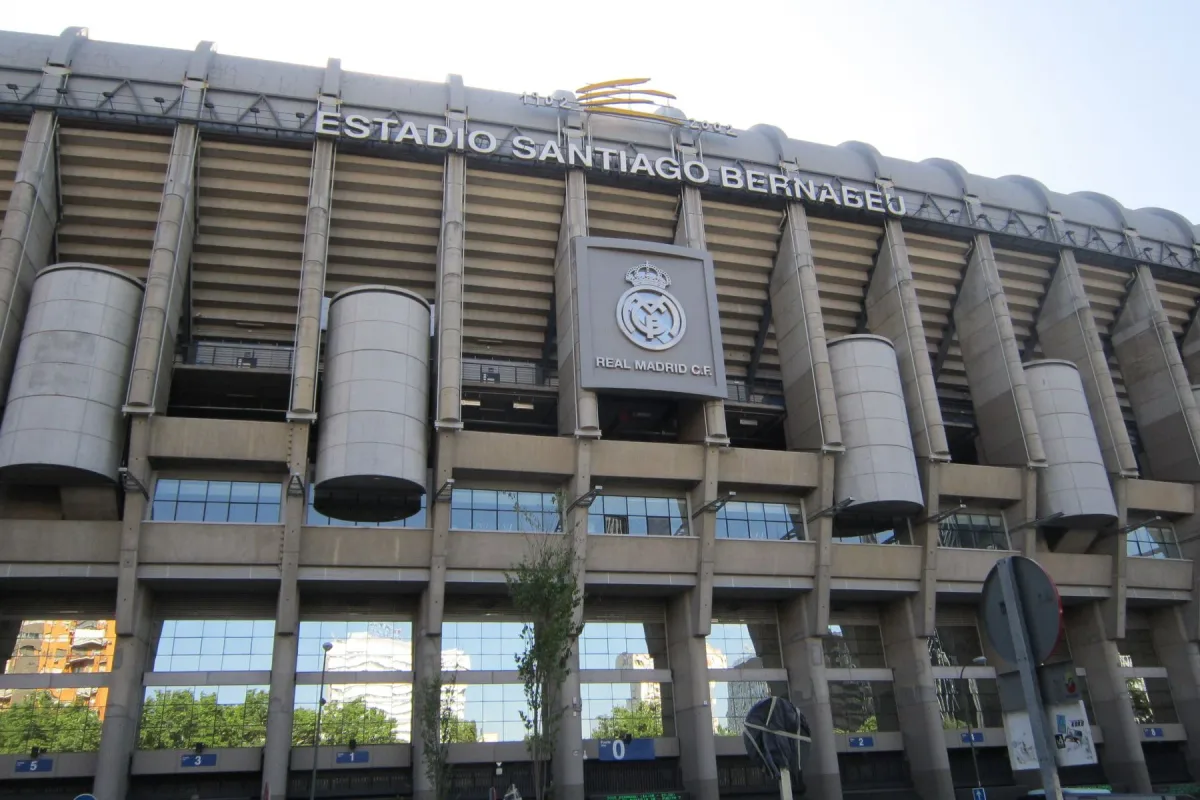
Real Madrid's stadium reopened after a vast renovation that wrapped it in a steel-and-glass shell and added a retractable pitch. The tour covers the trophy room, the dressing rooms, the players' tunnel and pitchside.
Tickets run around €35–37 for an adult booked online through realmadrid.com, with reduced tickets for children roughly 6–14. Buying at the ticket office costs a few euros more. Club members (socios) enter free with a membership card.
Hours are broadly Monday to Saturday 09:30–19:00 and Sunday/holidays 10:00–18:30, with last entry an hour before closing.
The critical detail: the tour is closed on match days. Check the fixture list before building an afternoon around it — this catches out more visitors than anything else.
Getting there: metro Santiago Bernabéu (line 10), which puts you at the gates.
The Cívitas Metropolitano Tour
Atlético's ground opened in 2017 and runs its own tour and museum, Territorio Atleti, covering the club's history from 1903. It costs meaningfully less than the Bernabéu — roughly €20–28 depending on whether you take the museum alone or add the panoramic stadium tour — and it's far less crowded.
If your interest is football generally rather than Real Madrid specifically, it's arguably the better visit: you get closer to the pitch, with fewer people, for less money.
Getting there: metro Estadio Metropolitano (line 7), about 25 minutes from the centre.
Buying Match Tickets
Buy from the clubs directly. Real Madrid and Atlético both sell through their own websites, and both release tickets in phases — members first, then general sale, typically two to three weeks before a La Liga fixture. Sign up for an account before tickets drop; the checkout is faster than the queue.
Prices vary enormously by opponent. A midweek La Liga game against mid-table opposition can be surprisingly affordable. A Clásico, a derby, or a Champions League knockout tie is a different market entirely — Champions League group games commonly start around €60–150, and knockout rounds climb from there into the hundreds.
Fixture dates move. La Liga confirms exact kick-off times only about two weeks ahead, to suit broadcasters. A fixture listed for "the weekend of the 12th" may end up on Friday night or Sunday at 21:00. Don't book non-refundable travel around an unconfirmed kick-off.
Avoid street resellers. Madrid has an active touting scene around both grounds, and duplicated or invalid tickets are common enough to be a real risk. Official resale, where the club runs it, is the only safe secondary route.
Matchday Practicalities
Arrive early. Both stadiums sit on single metro lines that saturate in the hour before kick-off. Ninety minutes ahead gets you in comfortably; thirty minutes ahead means queueing.
Kick-offs are late. Spanish league games frequently start at 21:00 on weekends. That means finishing around 23:00 and a very busy metro afterwards — it runs until roughly 01:30, so you're fine, but expect crowds.
Eat before, not at, the ground. Stadium catering is functional. The bars around both stadiums fill with supporters from a couple of hours before kick-off and are a large part of the experience.
Bag rules are strict at both grounds, and large bags generally aren't allowed in at all, with no cloakroom. Travel light.
Watching in a Bar Instead
If tickets don't work out, watching a big game in a neighbourhood bar is a genuine Madrid experience rather than a consolation prize. Bars in La Latina, Lavapiés and Malasaña show most fixtures, and a derby or a Champions League night fills them completely. Rayo Vallecano's home area, Puente de Vallecas, has the most partisan bars in the city — go with the right colours or none at all.