All Guides/seasonal
seasonal · 4 min read
Christmas in Madrid: What to Expect
Madrid at Christmas — the Plaza Mayor market, Gran Vía lights, twelve grapes at Puerta del Sol on Nochevieja, and the Three Kings parade on 5 January.
By Get Madrid · Updated September 9, 2026
The Season's Shape
The Spanish Christmas runs longer than the northern European version and peaks in a different place. Lights go up in late November, the markets open with them, and the season runs right through to 6 January — Día de Reyes, the Epiphany, when Spanish children traditionally receive their presents from the Three Kings rather than from Santa on the 25th.
That matters for planning: the first week of January is not the dead, everything-closed anticlimax it is elsewhere. It's the busiest, most festive stretch of the whole season.
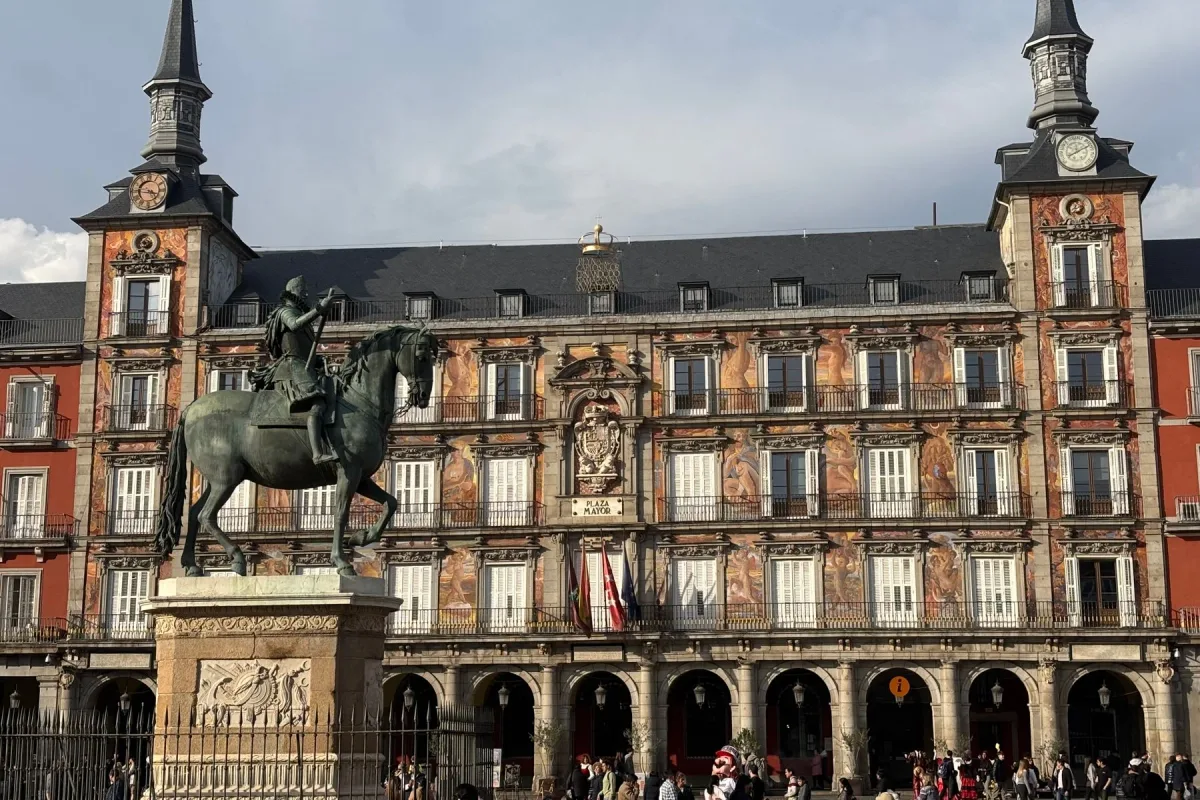
Plaza Mayor Christmas Market
The city's most famous market fills Plaza Mayor from late November through 31 December, with over a hundred stalls under the arcades.
What it actually sells is worth knowing, because it surprises visitors expecting a German-style market: the emphasis here is on nativity scene figures (belén pieces, sold individually and collected over years), Christmas decorations, and — uniquely — joke shop items and novelty wigs for 28 December, the Día de los Santos Inocentes, Spain's equivalent of April Fools' Day.
It's compact and gets extremely busy in the evenings. Go on a weekday morning if you want to look properly rather than shuffle.
Other markets worth a detour: Plaza de España and the artisan market at Mercado de Navidad de Chueca, both smaller and less crowded.
The Lights
Madrid takes its Christmas lighting seriously, and the switch-on in late November is a civic event. Gran Vía is the centrepiece — the main avenue strung end to end — with elaborate installations along Calle de Alcalá, around Cibeles, and in the smart streets of Salamanca, particularly Serrano and Ortega y Gasset.
The city runs the Naviluz, a dedicated Christmas lights bus, on a set route through the illuminated districts. Tickets sell out well ahead. Walking the same streets is free and, on foot, often better.
Two department-store traditions worth knowing: Cortylandia, the animated musical display on the El Corte Inglés facade near Callao, which runs several times daily and is a genuine childhood institution for Madrileños; and the animated window displays along Gran Vía.
Nochevieja: The Twelve Grapes
New Year's Eve in Spain centres on Puerta del Sol and the clock on the Real Casa de Correos. At midnight, as the clock strikes twelve, everyone eats twelve grapes — one per chime — for luck in each of the twelve months ahead. It's broadcast live nationally and watched in living rooms across the country.
If you want to be in the square itself: it fills hours ahead, access is controlled, and the crush is substantial. Buy peeled, de-seeded grapes in a tin from any supermarket in the preceding days — everyone does, and eating twelve whole grapes in twelve seconds is harder than it sounds.
The lower-effort version: watch it on television with a Spanish family or in a bar, which is what most of Madrid actually does, and go out afterwards. The nightlife on 1 January starts around 01:00 and runs until dawn.
Cabalgata de Reyes: 5 January
The Three Kings parade on the evening of 5 January is, for Spanish children, the biggest night of the year. Melchior, Gaspar and Balthazar process through the city on elaborate floats throwing sweets to the crowds, ending at the Palacio de Cibeles where the Kings address the city before a fireworks finale.
It's free, enormously popular, and the best family event in the Madrid calendar. Stake out a spot along the route an hour or two ahead — bring something for children to collect sweets in, because everyone else will have one.
The next morning, 6 January, is when presents are opened, and the traditional cake is roscón de reyes, a ring-shaped brioche with a figurine hidden inside. Bakeries sell nothing else that week.
Eating and Practical Notes
Chocolate con churros is the season's default warm-up, and Chocolatería San Ginés — open since 1894 and open absurdly late — is the classic stop, especially after the lights or on the way home from Nochevieja.
Closures: 25 December and 1 January close nearly everything, including most museums and many restaurants. 6 January is also a full public holiday. Book Christmas Eve and New Year's Eve dinners well ahead — restaurants that open on those nights run set menus and fill weeks in advance.
Weather: cold and dry rather than wet, typically 3–12°C in December, with clear skies and sharp evenings. A proper coat, and layers you can shed indoors where heating runs hot.
Crowds: the centre is at its busiest of the entire year between 20 December and 6 January. If your trip is about museums rather than markets, come in the first half of December instead — the lights are up, the market is open, and the crowds haven't arrived.